
Resilience… How Fitting.
Resilience (n.): the capacity of a body to recover its size and shape after deformation caused especially by compressive stress (toughness and elasticity).
In physics, resilience is the ability of an elastic material to absorb energy and then release that energy as it springs back to its original shape. The recovery that occurs in this phenomenon can be viewed as analogous to a person’s ability to bounce back after a jarring setback. The word “resilience” derives from the Latin resilire, meaning “to jump back” or “to recoil.”
Straight from the Merriam-Webster Dictionary, 2025.
At Resilience Chiropractic and Rehab, that definition isn’t just poetic — it’s the foundation of our entire philosophy. Resilience is about more than your spine, your muscles, or your mobility. It’s about your body’s ability to respond to stress, reorganize itself, and rise stronger than before.
Breaking Down Resilience
Let’s take this definition piece by piece, and see how each word connects to what we do inside our walls — and what it means for you.
“The Capacity”
Capacity means the maximum amount something can contain or produce. Think of this as your body’s bandwidth. We all have limits — a threshold we can safely operate within — but we also have untapped potential waiting to be accessed.
There’s a fine line between pushing yourself to your capacity and pushing past it. In chiropractic and movement terms, this is where things get interesting. Picture this:
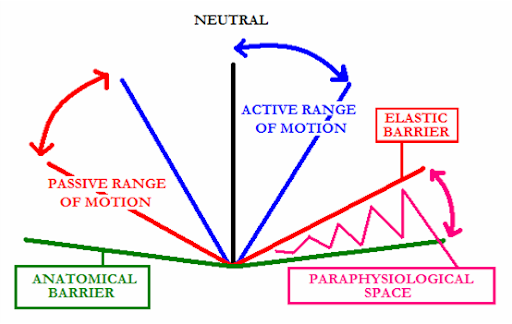
The blue line represents what you can actively do. This is your conscious movement — what you do under your own control.
The red line represents what I can help you access passively — through chiropractic adjustments, soft tissue work, or mobility assistance.
Then comes the pink space/green line — the space beyond your current capacity. This is where fitness programming, corrective exercises, and guided movement expand what you thought was possible for your body.
My goal isn’t to push you beyond safe limits. It’s to expand your zone of capacity — to move that blue line upward so your potential grows over time. That’s what resilience looks like in practice.
“Of a Body”
Of a body — that’s you.
Your body is the physical home you live in every single day, made up of bones, ligaments, muscles, and fascia — all designed to move together in coordinated harmony. But life happens — jobs that demand sitting, stress that builds tension, sports that test your limits — and suddenly that harmony fades.
At Resilience Chiropractic, we don’t see “the body” as parts to fix. We see it as a system that wants to self-correct — if you give it the right input.
The adjustment isn’t a magic trick; it’s a way to remind the nervous system that movement exists beyond what pain or tension has taught it to expect. Rehab exercises, likewise, are not punishment but practice — deliberate repetitions that teach your body new confidence where fear once ruled.
“To Recover”
To recover means more than the absence of pain. It’s the process of regaining something meaningful — something you’ve lost, damaged, or temporarily misplaced because life got in the way.
So I’ll ask you directly: What do you really want to recover?
Is it the ability to throw a ball with your kid without hesitation? To wake up without that dull stiffness in your low back? To walk your dogs, golf with your friends, finish a workout, or just feel like your body isn’t betraying you?
When people first step into my clinic, they often think pain relief is the goal. What they realize along the way is that relief is just phase one. Recovery is the act of reclaiming freedom — control, trust, and joy in how you move.
“Its Size and Shape”
This phrase seems simple, but it’s profound. “Size and shape” speaks to both function and form — your external movement patterns and internal endurance.
Sometimes the goal is straightforward:
Regaining strength after injury.
Standing taller without a limp.
Getting your shoulder to move freely again.
Other times, the goal is less about mechanics and more about identity:
Feeling athletic again.
Feeling capable again.
Feeling like yourself again.
That’s why our programs are designed to evolve with you — because recovering your full “shape” goes beyond the mirror. It’s about regaining the confidence that allows you to move through the world on your terms.
“After Deformation”
This one hits home. Deformation—that change in shape caused by external forces—happens to all of us, physically and emotionally.
Maybe your “deformation” came from:
A car accident that left lingering stiffness.
Years of desk work compressing your posture.
A high school sports injury that never healed quite right.
Stress that built up until your shoulders lived near your ears.
Whatever form it takes, deformation is part of being human. But here’s where resilience draws a line in the sand: your body isn’t broken. It’s adaptable. Those compressive stresses, injuries, or overloads don’t mean you’ve lost your ability to recover — they’re simply signs that the body needs a recalibration.
Chiropractic care, when paired with corrective movement, helps your system “spring” back — not by forcing it, but by giving it space to remember how.
“Caused Especially by Compressive Stress”
Compressive stress — what a vivid image. It applies to metal beams and muscles alike. Forces push inward, condensing something that once had space to move freely.
For many of the patients I see, “compressive stress” isn’t just physical. It’s the weight of work deadlines, family expectations, or the quiet belief that their body is too far gone to change. It’s mental and emotional pressure that shows up as stiffness, grinding joints, or fatigue.
If you’ve ever felt like your goals were too far away to even try — that your pain confined you so tightly you could barely breathe — that’s compressive stress in real life.
Resilience Chiropractic & Rehab exists to change that dynamic. Through assessment, movement, and hands-on care, we help release the load that’s been pushing inward for too long.
The Physics of Human Recovery
Physics tells us that an elastic object, when deformed, stores potential energy. Once the external pressure is lifted, that energy propels it back into shape.
In human terms, that means your current challenges — your setbacks and even your pain — aren’t wasted. They’re potential energy waiting to be released. When you invest in your recovery, you channel that stored energy toward a stronger, more flexible, more capable version of yourself.
Pain becomes information. Fatigue becomes feedback. Each setback becomes a catalyst for adaptation.
That’s what resilience looks like in motion.
A Real Example of Resilience
Let me tell you about one of my patients, whom I’ll call Sarah.
Sarah came in after months of lower back pain from working long hours at a computer. She was convinced that her body was “broken” and that her only goal was simply to “make the pain go away.”
Through evaluation, we saw what was really happening: limited hip mobility, tight thoracic rotation, and decreased hip internal rotation — all classic signs of “compressive stress.”
We began with small mobility drills, soft tissue work, and specific chiropractic adjustments. But as Sarah started regaining control of her movement, her goal evolved. Within six weeks, she wasn’t just pain-free — she wanted to start running again. Three months later, she completed her first 5K in years.
That transformation wasn’t magic. It was resilience — the body’s capacity to recover shape after pressure, once given the right system to do it.
The Resilience Philosophy
At Resilience Chiropractic & Rehab, we believe healing doesn’t end at “better.” It begins there.
Our approach is built on three pillars:
Assessment: Understand your movement patterns, strengths, and limitations through a mix of functional screening and personalized evaluation.
Rehabilitation: Restore optimal movement through precise corrective exercises, manual therapy, and neuromuscular reeducation.
Performance: Go beyond recovery — train movement capacity, strength, and coordination so your body doesn’t just return to baseline but surpasses it.
This isn’t just theory. It’s the culmination of modern movement science, clinical practice, and one core human truth: the body is designed to adapt, not break.
The Final Bounce
Now, coming full circle: resilience isn’t about avoiding compression or never being tested. It’s about developing a capacity to spring back when life presses down.
It’s the quiet confidence that tells you, “I’ve been here before, and I know how to respond.” It’s the recovery that happens not just in your muscles, but in your mindset.
You’re not stuck under the weight of compressive stress — you just haven’t found the system to release it yet. That’s why Resilience Chiropractic & Rehab exists: to help unravel the pressure, reestablish your capacity, and remind your body of what it’s capable of.
Resilience isn’t only in physics textbooks. It’s already in you.
